| Dear Sample,
Teens and preteens can be very challenging for parents, compounding the everyday stress that parents feel these days. One way to help reduce this stress is to understand the difference between what is and what is not normal behavior—a topic that we covered in last week's newsletter.
Understanding this difference can help parents spend more time enjoying their teens and preteens and less time worrying about them—and provides a sense of when it might be appropriate to get professional help for the kid or the family. It also helps us respond in ways that avoid damaging our relationship and inspiring rebellion. Listed below are just a few examples of contrasts between helpful and unhelpful responses and approaches to teens and preteens:
Helpful: Listen to their opinions—display respect and love, even if you disagree.
Unhelpful: Argue with them and try to set them straight.
Helpful: Encourage them to take on more responsibilities, such as managing their own money, getting ready for school on their own, working things out with teachers/coaches, etc.
Unhelpful: Rescue and get overly involved in things that they can do for themselves.
Helpful: Do your best to live according to your values. Admit when you fall short of doing so.
Unhelpful: Hold higher standards for them than for yourself.
Helpful: Provide lots of supervision done with an attitude of love and concern. Try not to leave them alone at home. Require that they come with the family on almost all outings.
Unhelpful: Make the mistake of thinking that they no longer need as much supervision as they used to.
Helpful: Get to know their friends and build relationships with them.
Unhelpful: Ignore their friends or treat them like “bad influences.”
Helpful: Have regular meals together.
Unhelpful: Let them “do their own thing” and never expect them to spend time with the family.
Helpful: Expect them to serve the family by completing their fair share of contributions.
Unhelpful: Allow them to avoid their chores.
Helpful: Allow them to drive when they are old enough, have paid at least half of the cost, and they are good at following the rules of the home.
Unhelpful: Allow them to drive with no restrictions.
Helpful: Have them set a reasonable curfew. “Reasonable” is the key. This can be different every night that they go out, but generally it shouldn’t be any later than 10 p.m. If they refuse to be reasonable, set the time for them and make it early.
Unhelpful: Let them come home at night at whatever time they like. (Through this, you will demonstrate that you don’t really care what’s going on in their lives.)
Helpful: Set significant limits over technology use. Do so by saying, “I allow the use of digital devices when it doesn’t hurt our relationship. This includes causing me to worry about you.”
Unhelpful: Let them spend most of their time on their devices without supervision. Allow them to bond more with their screens than with you. Spend more time watching your screen than watching and enjoying being with them.
Always remember the big picture during this period of their development—the most important factor affecting the adjustment of our teens and preteens is the quality of our relationship with them. Remember that they still want us in their lives, but that they are also determined, like preteens and teens worldwide, to act like they don’t.
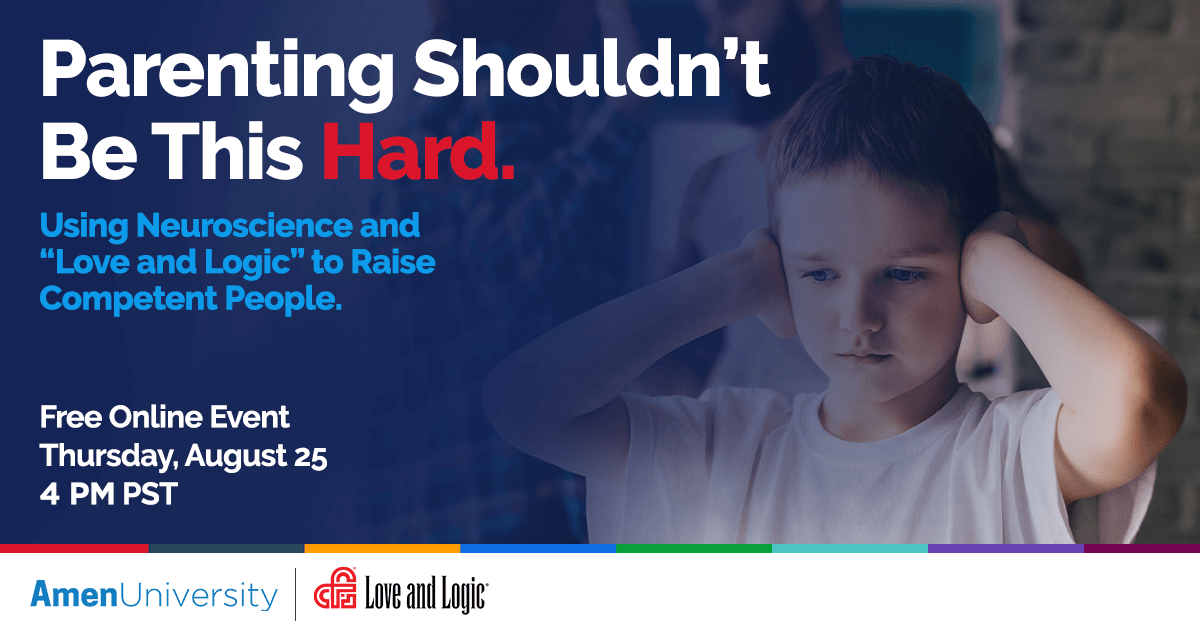
Remember to register for the upcoming virtual event that Dr. Daniel Amen and I will be presenting. This informative session, Parenting Shouldn’t Be This Hard: Using Neuroscience and Love and Logic to Raise Competent People, will provide insights into the science and art of raising kids and will be held on August 25, 2022, at 4:00 pm PT / 7:00 pm ET.
Thanks for reading!
If this is a benefit, forward it to a friend. Our goal is to help as many families as possible.
Dr. Charles Fay |